

This year, I was blessed with the incredible opportunity to visit the holiest mosques in Islam for Umrah (the lesser pilgrimage): Masjid Al-Haram (Sacred Mosque) in Makkah province and Masjid An-Nabawi (Prophet’s Mosque) in Madinah in Saudi Arabia – the land where our beloved Prophet Muhammad (peace and blessings be upon him) was born.
More than a decade ago, my late father’s dear cousin inspired me to consider the journey of Umrah. However, for many years, I found myself held back by obstacles and limiting beliefs. Now, I truly understand how important faith and perseverance are in our lives. If only I had the wisdom I possess today, I would have turned to prayer and asked God to help me overcome those hurdles. But life has its lessons, teaching us to live, learn, and grow through every experience.
I can honestly say that this pilgrimage felt like a calling, a moment of divine timing that aligned perfectly for me to perform Umrah with my family. I fondly remember a heartfelt phone call from my maternal uncle, inviting me to join him and my aunt. At first, I hesitated for reasons that only God understands.
“We created man—We know what his soul whispers to him: We are closer to him than his jugular vein.” [Quran, 50:16]
Then, a remarkable turning point occurred. The very next day, I received an unexpected voice note from a respected acquaintance who inadvertently sent it to me. Our conversation revealed that he was in Saudi Arabia for Umrah, which rekindled my spirit and prompted me to reconsider my earlier decision. I confided in him about my uncle’s invitation, and he offered unwavering encouragement, sharing valuable insights. In that moment, I recognised it as a sign. With newfound enthusiasm, I expressed my desire to travel with my family, and together we spent just over a week in the new year in Makkah and Madinah.
Every pilgrim, regardless of gender, must enter a state of ihram, a sacred state of purity, to perform this pilgrimage. When we were on the plane, the pilot announced when we reached the miqat, the designated boundary where we should officially enter into ihram. It felt profound to prepare for this important moment, remembering to make our intention clear to perform Umrah.
We arrived in Makkah early Tuesday morning, just before Fajr (dawn prayer). Overwhelmed and exhausted already, I was still learning about the rituals and rites of Umrah. Thankfully, my uncle and aunt had performed Umrah a few times, and their guidance was invaluable. Within hours of landing and reaching our hotel, there I stood in front of the Ka’bah; the Sacred House of God in Masjid Al-Haram. Its beauty left me awe-struck, the black silk cloth adorned with gold-embroidered calligraphy of Quranic verses and the first pillar in Islam – the declaration of faith covering this humble yet mighty house – the focal point where Muslims from all corners of the globe unite in their prayers, embodying the belief in Tawheed; the Oneness of God, who is complete.
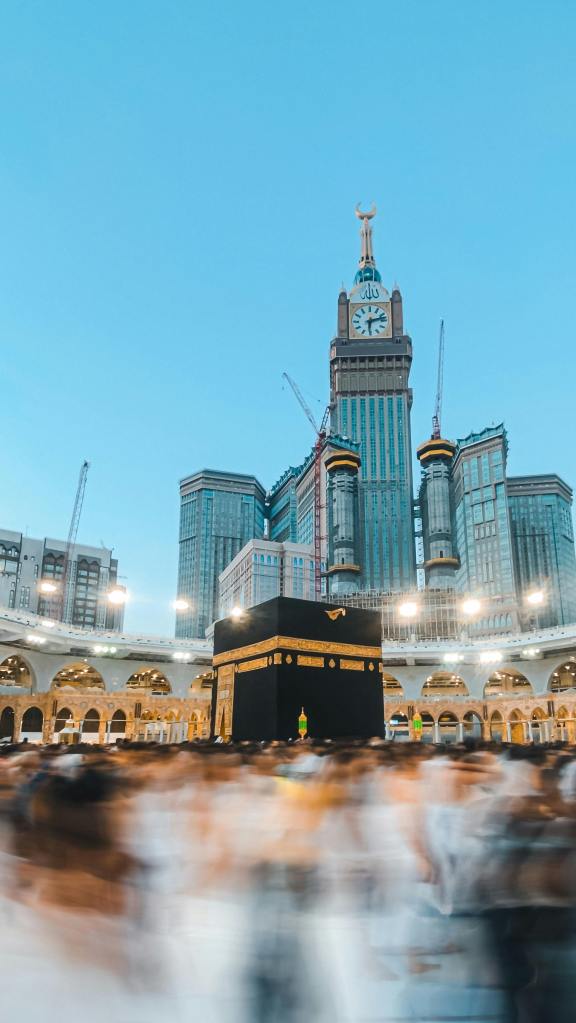
Islamic scholars have expressed various views on the origins of the Ka’bah. Some say it was built by the heavenly angels, while others believe it was constructed by Adam (peace be upon him), the father of humanity. Throughout history, the Ka’bah faced periods of neglect until Prophet Ibrahim (Abraham in the Bible and Torah) and his son Ishmael (peace be upon them both) took on the sacred task of rebuilding it. Regardless of the differing perspectives, all scholars agree on the significant role that Prophet Ibrahim (peace be upon him) played in its history.
“As Ibrahim and Ishmael built up the foundations of the House, they prayed: ‘Our Lord, accept (this) from us. You are the All Hearing, the All Knowing.” [Quran, 2:127]
After completing the tawaf, which is the ritual of circumambulating the Ka’bah, we were struck by the call to prayer for Fajr. Hearing the adhan in person was surreal; although we had listened to it live on TV during Ramadan, witnessing it in person was a completely different experience. As the atmosphere grew quieter, we could hear the birds singing in praise of the Most Gracious. It was beautiful to witness the largest congregation I had ever seen, with worshippers bowing in unison to God.
“So perform the regular prayers in the period from the time the sun is past its zenith till the darkness of the night, and (recite) the Quran at dawn – dawn recitation is always witnessed and during the night wake up and pray, as an extra offering of your own, so that your Lord may raise you to a (highly) praised status.” [Quran, 17:78-79]
As we felt the thirst kick in, the refreshing taste of the cooling Zamzam water brought us comfort and relief. This sacred water is deeply cherished, believed to have miraculously appeared when Hagar, the wife of Prophet Ibrahim (peace be upon him), desperately searched for water for her son Ishmael (peace be upon him) in the vastness of the desert. Zamzam water has many benefits with healing, health and is considered a blessing for Muslims. In the words of Prophet Muhammad (peace and blessings be upon him), “The water of Zamzam is (good) for whatever it is intended.” [Sahih Muslim] Each year, the Zamzam well continues to serve as a source of sustenance and spiritual nourishment for countless pilgrims, bringing them healing and hope.
The cooling Zamzam water truly revitalized us as we undertook the Saee, the sacred rite of walking back and forth seven times between the small hills of Safa and Marwa, right next to the Ka’bah in Masjid al-Haram. This ritual is a poignant reminder of Hagar’s unwavering faith and her tireless quest for water, a testament to her resilience and hope in God’s mercy. The roughly 3.6km distance made me anxious, but somehow, I carried on walking without stopping. It was heartwarming to witness how believers—men and women alike—honoured Hajar’s desperate search for sustenance for her son and celebrated God’s mercy in response to her prayers.
“These will be given blessings and mercy from their Lord, and it is they who are rightly guided. Safa and Marwa are among the rites of God, so for those who make major or minor pilgrimage to the House it is no offence to circulate between the two. Anyone who does good of his own accord will be rewarded, for God rewards good deeds, and knows everything.” [Quran, 2:157-158]
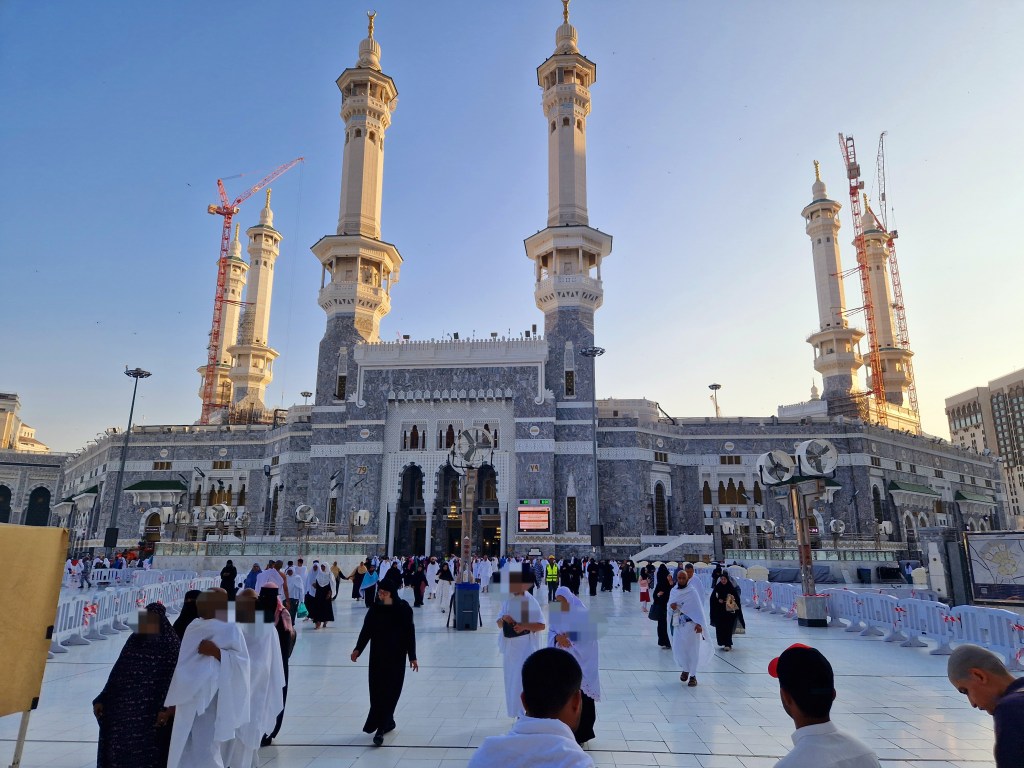
We spent five transformative days in Makkah, and each moment I had the chance to perform tawaf, I poured my heart out in prayers for forgiveness and success in both this life and the hereafter. The final day at Masjid Al-Haram was deeply emotional for me. Leaving this sacred city felt incredibly difficult, almost as if I were parting from a home that had welcomed me back to my spiritual roots. As I walked the same ground that the Prophet Muhammad (peace and blessings be upon him) and his companions (may God be pleased with them) once walked, I felt a profound connection to early Islamic history, especially in Madinah—a beautiful and peaceful city.
Performing Umrah was a surreal experience that vividly recalled the stories I had read about the Prophet’s life. I pray that I can return home and embark on the Hajj pilgrimage. May God invite me back again and again, Ameen.
Meet the author: Anjuma Choudhury, Development & Strategic Lead at Muslim Women Connect
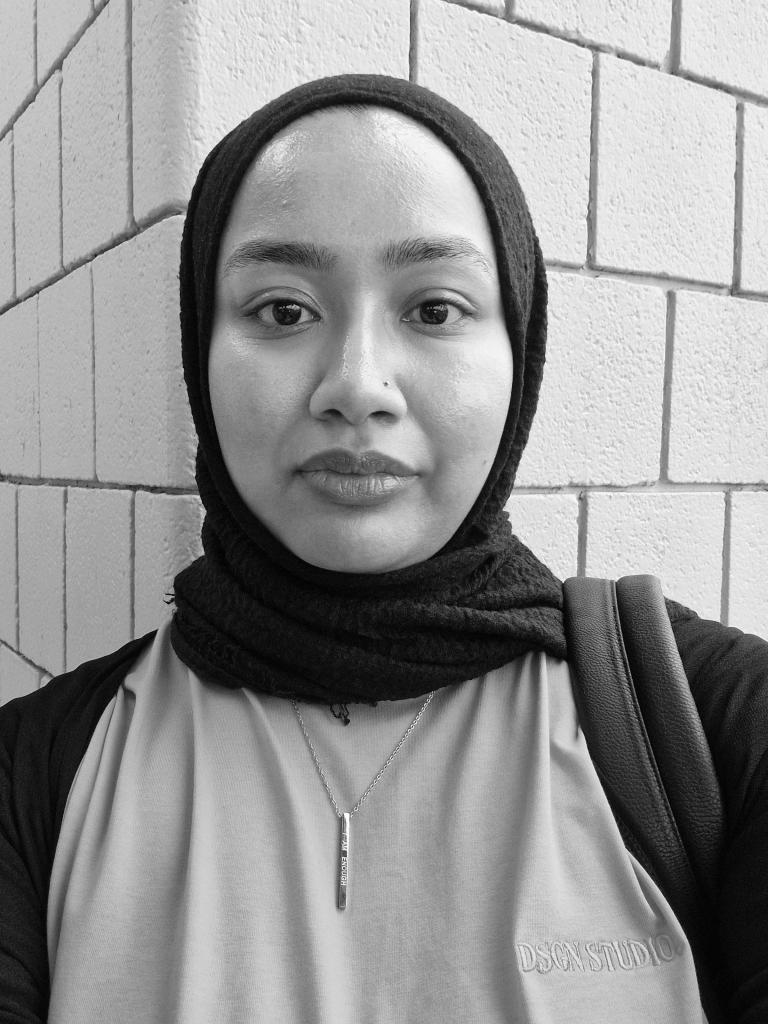
Having started her career in faith-based charities, Anjuma made a seamless transition to local government in 2021. In addition to her professional work, she volunteers as the Development & Strategic Lead for Muslim Women Connect, dedicating her time to shaping our mission.
When she’s not driving impactful community initiatives, Anjuma loves hosting gatherings, experimenting in the kitchen, and crushing her CrossFit goals. She’s also an avid reader who wishes she had more time to immerse herself in books.
 Muslim Women Connect